
By Evolve Automotive | service | 5 min read
Choosing the Right Engine Oil for Your Premium Car in Chennai
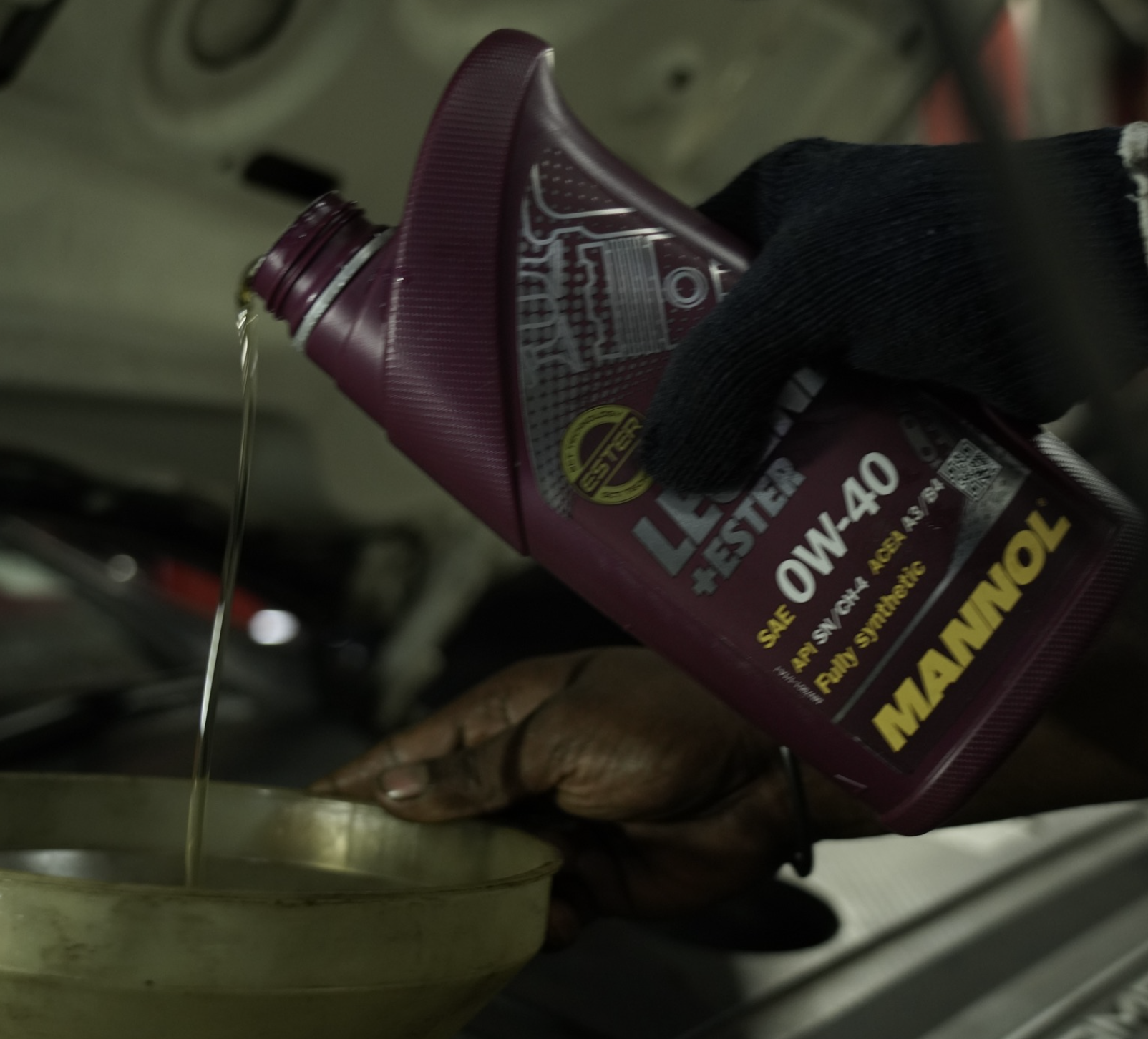
Engine oil is one of those topics where the owner’s manual is correct and most of the advice circulating in workshops and online is not. For a premium European car, the oil specification is not a suggestion, it is an engineering requirement. Using the wrong viscosity, the wrong oil type or an oil that does not meet the manufacturer’s additive specification can reduce engine protection, increase wear on turbocharged components, and in some cases shorten the life of emissions control systems.
This guide covers what the key terms on an engine oil label actually mean, what the differences between oil types matter for Chennai driving conditions, and how to read the manufacturer specification for your specific car rather than guessing.
+91 98849 88632 · Mon–Sat 10AM–7PM
Understanding the Viscosity Rating
The viscosity rating on an engine oil label, such as 5W-30 or 0W-40, describes how the oil flows at two different temperature conditions. The number before the W which stands for Winter describes the oil’s viscosity when cold, typically at engine start-up. A lower cold viscosity number means the oil flows more easily at low temperature and reaches the bearings faster on a cold start. The number after the W describes the viscosity at normal operating temperature.
For most modern European premium cars, the manufacturer specifies a low cold viscosity (0W or 5W) because rapid lubrication on start-up is critical for turbocharged engines and for reducing cold-start wear, which accounts for a disproportionate share of total engine wear over the vehicle’s life.
In Chennai, the cold start condition is less severe than in temperate climates the engine is rarely truly cold. What matters more is the high-temperature viscosity, which determines the oil film thickness between moving parts at operating temperature in stop-and-go traffic. Using an oil with a higher than specified high-temperature viscosity can increase internal resistance and reduce fuel economy; using one that is too low can compromise film thickness under high load.
Oil Types: What the Differences Actually Mean
Fully Synthetic
Fully synthetic oil is produced through a controlled chemical synthesis process that creates oil molecules of a more uniform size and structure than those found in mineral-based oil. The result is more consistent viscosity across a wider temperature range, better resistance to oxidation and thermal breakdown, and longer service life. All modern European premium cars specify fully synthetic oil. There is no case for using mineral or semi-synthetic oil in a BMW, Mercedes-Benz, Audi, Volvo, Jaguar, Land Rover or Porsche.
Semi-Synthetic
Semi-synthetic oils blend mineral base stocks with synthetic components to improve performance over straight mineral oil at a lower cost than full synthetic. They are appropriate for standard passenger cars with naturally aspirated engines and longer service intervals. For a turbocharged premium European car, semi-synthetic do not provide sufficient thermal stability. The turbocharger bearings operate at temperatures that degrade semi-synthetic oil faster than the service interval allows for.
Mineral Oil
Mineral oil is refined directly from crude oil without the synthesis process that produces fully synthetic oil. It has lower resistance to oxidation and thermal breakdown and a shorter service life. Appropriate for older vehicles with simple naturally aspirated engines and short oil change intervals. Not appropriate for any modern premium European car regardless of how it is driven.
Manufacturer Specifications: ACEA, API and Brand Approvals
The viscosity grade is only one part of the oil specification. Equally important is whether the oil meets the manufacturer’s additive and performance specification. These are indicated on the oil label through certifications from organisations like ACEA (Association des Constructeurs Européens d’Automobiles) and API (American Petroleum Institute), and through specific manufacturer approvals.
Manufacturer approvals are the most specific and most important for premium European cars. BMW specifies LL-01 or LL-04 depending on the engine. Mercedes-Benz uses MB 229.5, 229.51, or 229.52. Audi and Volkswagen Group use VW 504.00 or 508.00 for the latest low-SAPS specification. Volvo has its own VCC-RBS0-2AE specification. Porsche uses A40 for most TFSI engines.
Using an oil that meets the correct ACEA rating but does not carry the specific manufacturer approval can still result in incorrect additive chemistry for the engine. The manufacturer approval is the most reliable indicator that the oil formulation is correct for the specific application.
- BMW: Longlife-01, Longlife-04 or Longlife-14 FE depending on engine generation
- Mercedes-Benz: MB 229.5 (most common), MB 229.51 or MB 229.52 for newer engines
- Audi and Volkswagen Group: VW 504.00 or VW 508.00 for current engines
- Volvo: VCC-RBS0-2AE for Drive-E engine family
- Porsche: Porsche A40 for 2.0 TFSI and 2.9 TFSI Macan engines
Chennai Conditions and Oil Degradation
Chennai’s stop-and-go traffic and sustained high ambient temperatures accelerate oil degradation faster than the global service schedule assumes. At operating temperature in slow traffic, the engine cycles between high load and low load repeatedly, which is harder on oil than sustained highway cruising at a consistent temperature.
For turbocharged engines specifically, oil coking is a risk in Chennai conditions. When a turbocharged engine is switched off after hard use, the turbocharger which can reach temperatures above 900 degrees at the shaft continues to heat the surrounding oil after the oil pump stops circulating. This oil can bake onto the turbo shaft bearings, reducing bearing clearance and increasing wear over time. Using the correct fully synthetic oil specified by the manufacturer, and allowing the engine to idle briefly before switching off after hard driving, reduces this risk.
Practically: in Chennai city driving, follow the dashboard oil service prompt rather than a fixed kilometre sticker. The condition-based monitoring systems on modern European cars account for driving patterns, and city-heavy use in Chennai will trigger the prompt earlier than the maximum distance interval.
|
The three things that determine whether you have the right engine oil in your car: 1. Viscosity grade matches the manufacturer specification for your engine check the owner’s manual or the filler cap label, not a general recommendation by oil grade. 2. The oil carries the specific manufacturer approval for your car: BMW Longlife, MB 229.x, VW 504.00 or 508.00, Volvo VCC, Porsche A40. ACEA and API ratings alone are not sufficient for modern European engines. 3. It is fully synthetic. There is no case for mineral or semi-synthetic in a turbocharged premium European car. At Evolve, we confirm the correct oil specification from the vehicle’s build data before every oil service, not from a general reference chart. |
FAQ: Engine Oil for Premium Cars in Chennai
Can I use any fully synthetic oil in my BMW or Mercedes-Benz?
No. Fully synthetic is the correct oil type, but not all fully synthetic oils meet the manufacturer approval required for European premium cars. BMW engines require oil carrying the Longlife-01, Longlife-04 or Longlife-14 FE approval depending on the engine. Mercedes-Benz engines require MB 229.5, 229.51 or 229.52. Using a fully synthetic oil that meets ACEA A3/B4 but does not carry the specific manufacturer approval can have incorrect additive chemistry for the application. Check the oil label for the manufacturer approval, not just the viscosity grade.
How often should engine oil be changed in a premium car driven in Chennai?
Follow the dashboard service prompt rather than a fixed distance. Modern European cars monitor oil condition through algorithms that account for driving pattern, engine load and temperature history. In Chennai city traffic, the prompt will typically appear between 8,000 and 12,000 km because the system detects the harder duty cycle. Resetting the service indicator without changing the oil, or using a fixed sticker interval that is longer than the prompt, is not the correct approach for Chennai conditions.
What happens if the wrong oil viscosity is used in a European car?
Using a higher-than-specified viscosity increases internal engine resistance and can reduce fuel economy and heat rejection. Using a lower-than-specified viscosity at operating temperature reduces the oil film thickness between bearing surfaces under load, increasing wear. For turbocharged engines, which depend on consistent oil pressure at the turbo bearings, incorrect viscosity is a more serious concern than for naturally aspirated engines. Always use the grade specified in the owner’s manual, not the grade recommended by the oil brand.
Is it safe to top up engine oil with a different brand between services?
Top-up with a fully synthetic oil that meets the same manufacturer approval specification as the oil already in the engine. Mixing oils of the same approval specification from different brands is generally acceptable for topping up, as the additive chemistry is regulated by the approval standard. Avoid topping up with an oil that does not meet the same approval, even if the viscosity grade matches.
What oil specification does Evolve Automotive use for BMW and Audi service?
For BMW, we use BMW Longlife-01 or Longlife-04 specification oil matched to the engine variant, in 0W-30 or 5W-30 viscosity as specified. For Audi and Volkswagen Group engines, we use VW 504.00 or VW 508.00 specification oil, typically in 0W-20 or 0W-30 grade depending on the engine. The specification is confirmed from the vehicle’s build data before every oil service.
|
Book an Oil Service at Evolve Automotive 49 & 51/2, Thiru-Vi-Ka Industrial Estate, Guindy, Chennai, Tamil Nadu 600032 evolveautomotive.in/contact-us/ 98849 88632 | Mon–Sat 10AM–7PM |
|
Engine oil service and premium car maintenance in Chennai at Evolve Automotive, Guindy. |
|
Servicing BMW, Audi, Mercedes-Benz, Volvo, Jaguar, Land Rover, Porsche and Skoda. Correct oil specification confirmed for every visit. Dealer-level work at independent workshop prices. |
|
Call / WhatsApp: 98849 88632 | evolveautomotive.in/premium-cars/ |