
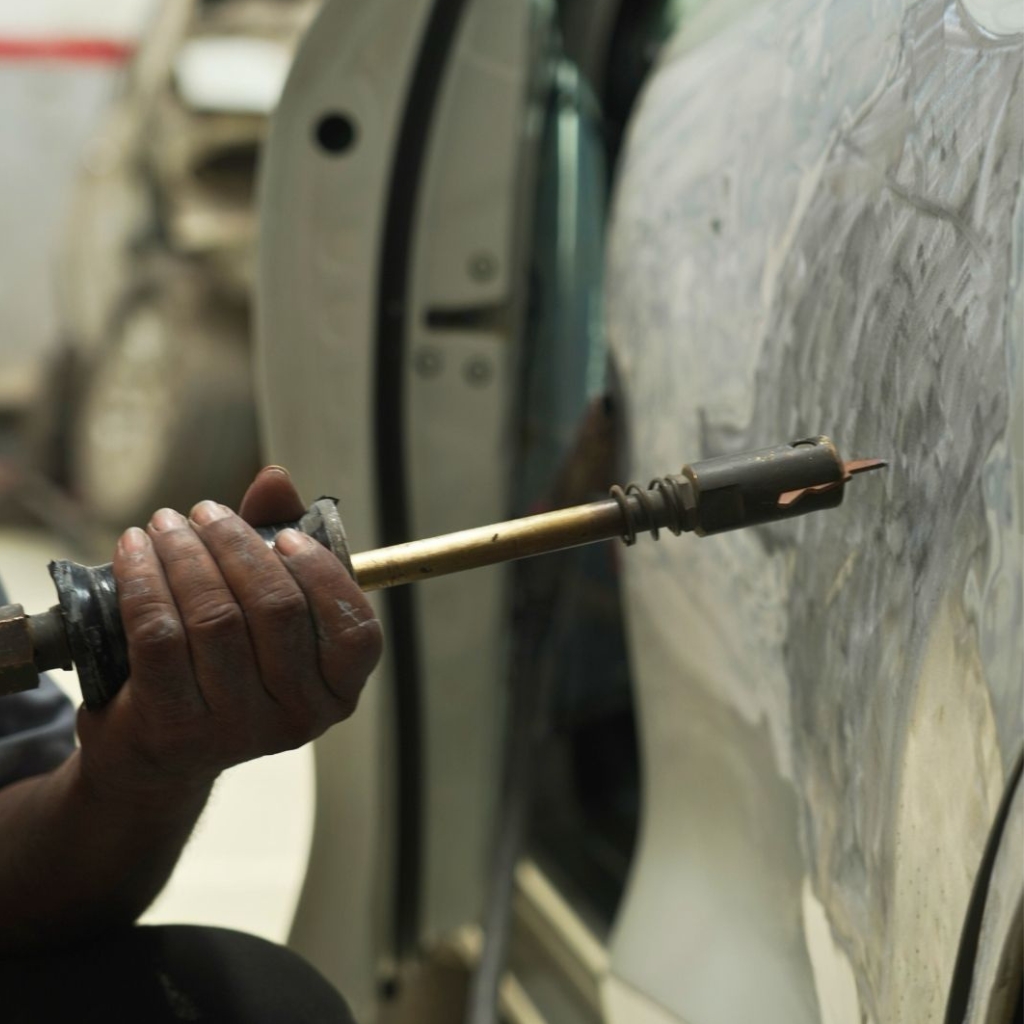
Side panel dents are one of the most common body shop jobs we see in Chennai and the Maruti Baleno is one of the cars we see most often. Tight basement parking, narrow lanes, runaway shopping trolleys, and the occasional careless door from the car next to you. It happens to everyone at some point.
What matters is how the repair is done. A side panel dent on a Baleno is not a complicated job — but it is a job that is easy to do badly. Rushed repairs, too much filler, poor colour matching these are the things that leave a repair looking like a repair six months later. Here is exactly how we approach this job and why the process matters.
+91 98849 88632 · Mon–Sat 10AM–7PM
First — Understanding What Kind of Damage We Are Dealing With
Not all dents are the same, and the repair approach depends on the specific damage. Before anything else, we assess the panel properly:
- Is the metal stretched or just displaced? A sharp impact stretches the metal — a low-speed parking knock usually just pushes it in. Stretched metal needs different treatment than a clean indent.
- Is the paint broken or cracked at the damage point? If the paint has cracked, filler and repaint is the only correct approach. If the paint is intact and the dent is shallow, paintless dent repair may be possible in some cases.
- How large is the affected area? A dent that looks small from outside often involves a larger area of stressed metal around the impact point — this is what gets missed in rushed repairs and shows up later as surface irregularities under sunlight.
On most Baleno side panel jobs we see, the damage involves paint cracking at the impact point and some degree of metal displacement in the surrounding area. The correct repair for this is dent removal followed by filler work, primer, and a full colour and clear coat respray of the affected panel.
The Repair Process — Step by Step
Panel removal and proper access
For significant side panel damage, we remove the panel or at minimum the surrounding trim to get full access to the reverse side of the metal. Working from behind the panel using a dent puller allows us to massage the metal back towards its original shape without the excessive hammering that causes thinning and additional stress. Trying to do this without proper access leads to uneven metal and a repair that requires more filler than necessary.
Dent pulling and metal reshaping
We use dent puller equipment to bring the displaced metal as close as possible to its original profile before any filler is applied. The goal at this stage is to minimise the amount of filler needed not to use filler as a shortcut to skip proper metal work. A repair built on a thick layer of filler will crack, shrink, and show witness marks within a year or two. One built on well-shaped metal with a thin skim of filler will last as long as the original paint.
Filler application and surface preparation
Body filler is applied in controlled thin layers each layer cured fully before the next. The filled area is block-sanded progressively through finer grades until the surface profile matches the surrounding undamaged panel exactly. This is the part of the job that takes patience and cannot be rushed. If the surface is not right before primer goes on, it will not be right under paint either.
Primer and sealing
A high-build primer is applied across the repair zone and feathered into the surrounding original paint. The primer reveals any remaining surface imperfections any high or low spots are corrected before colour goes on. This step also seals the filler against moisture, which is important in Chennai’s humid conditions where an unsealed repair absorbs moisture and eventually delaminates.
Colour matching and paint application
The Baleno’s paint code is used to mix the colour using a computerised mixing system. The mix is verified visually against the adjacent undamaged panels in natural light before application because a colour that looks correct indoors can look slightly off outside. Paint is applied in the booth controlled temperature and filtered airflow are what separate a professional paint job from one done in the open.
The base colour coat is applied in the correct number of passes, followed by a clear lacquer coat that provides depth, gloss, and UV protection. The clear is what gives a panel that wet look and it needs to go on at the right film thickness, not too thin and not too heavy.
Finishing and inspection
Once the paint has cured, the panel is machine-polished to blend the repaired area with the surrounding paint. We inspect the finish in natural light, side lighting, and at different angles. A panel with any visible colour difference, texture mismatch, or surface irregularity goes back into the booth. The car does not leave until the repair is invisible.
What the Owner Gets Back
A side panel that looks the way it did before the damage. Not approximately — actually. The paint matches, the surface is smooth, and there is no visible line between the repaired area and the original panel. That is the standard we work to on every body shop job, whether it is a Baleno or a BMW.
The difference between a repair that lasts and one that does not is almost entirely in the preparation — how well the metal is shaped before filler, how carefully the surface is prepared before primer, and how accurately the colour is matched before paint. The spray gun is the last step, not the most important one. At Evolve Automotive, we do not skip the steps that are not visible. |
Frequently Asked Questions
COMMON QUESTIONS
Q: Can a Baleno side panel dent be repaired without full repainting?
A: It depends on the dent. If the paint is completely intact and the dent is shallow with no sharp crease, paintless dent repair is sometimes possible. If the paint has cracked or the metal has a sharp fold, a full repair with filler and repaint is the correct approach. We assess each dent individually before recommending the repair method.
Q: How long does a Baleno side panel dent repair take?
A: A typical side panel repair — dent work, filler, primer, colour, and clear — takes two to three working days. Each stage needs to cure properly before the next begins. Rushing any stage compromises the durability of the repair.
Q: Will the repaired panel look different from the rest of the car?
A: No — when done correctly, the repair is invisible. The colour is mixed using the car’s paint code and verified against the adjacent panels before application. The final inspection is done in natural light at multiple angles. If we can see a difference, it goes back into the booth.
Q: How much does Baleno dent repair cost in Chennai?
A: Pricing depends on the size of the damage, the number of panels affected, and whether any trim needs to be removed and refitted. We provide a clear quote after inspection — before any work begins. Pricing is on request.
Q: Does Evolve Automotive handle insurance repairs for Baleno body damage?
A: Yes. We work with owners on accident repair jobs and can provide a detailed repair estimate. Contact us directly to discuss your specific situation.
Baleno dent repair and painting in Chennai — Evolve Automotive, Guindy. |
Body shop repairs done properly — correct metal work, correct primer, correct colour match. No shortcuts. We serve owners from across Chennai. |
Call / WhatsApp: 98849 88632 | 49, Guindy Industrial Estate, Chennai – 600032 | evolveautomotive.in/denting-painting/ |